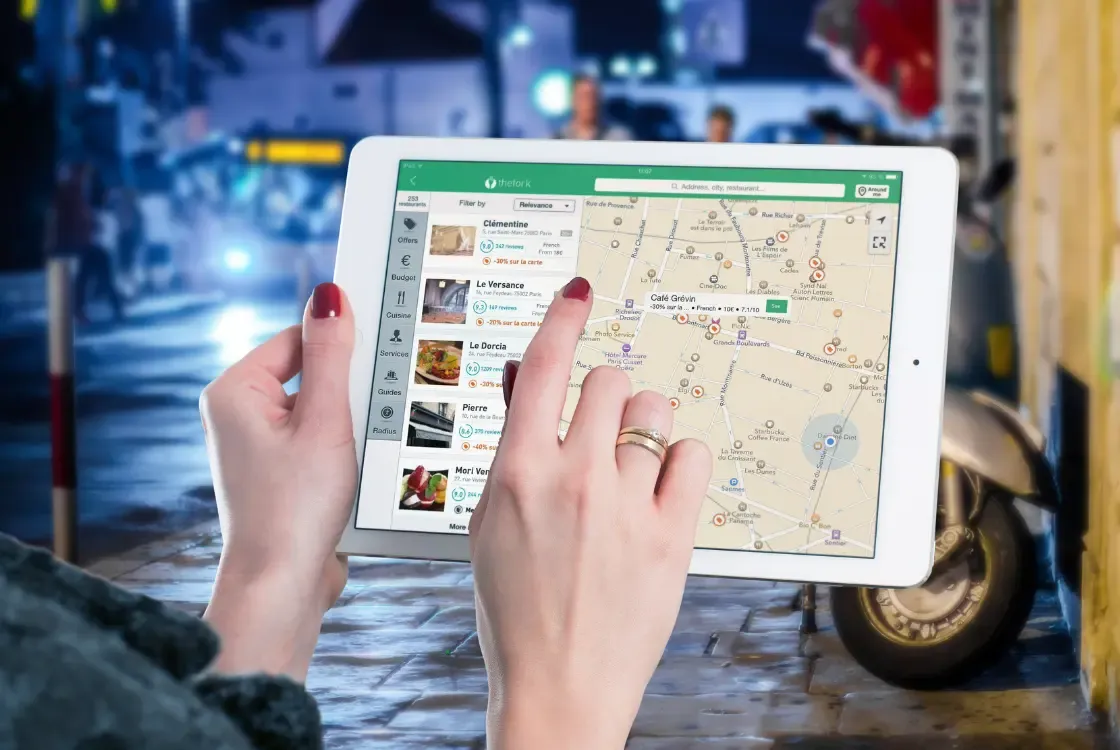
Local SEO in Indonesia is the work that helps people in the area you serve find your business, both in Google search results and on Google Maps. Picture this: someone in Surabaya types “motorbike repair near me” into Google, and your workshop appears first, complete with its rating, address and phone number. That is what local SEO can do. This guide covers the local SEO tactics that work for local businesses in Indonesia in 2026, from optimising your Google Business Profile to managing customer reviews.
Further reading:- What Is SEO? A Complete Beginner's Guide for Indonesian Online Businesses in 2026
- How to Do Keyword Research for Local Businesses in Indonesia
- On-Page SEO Techniques That Still Work in 2026
Why does local SEO matter for local businesses in Indonesia?
Indonesian consumers have changed the way they shop. Global Google research from 2016 (Think with Google) found that 76% of people who search on their smartphone for something nearby visit a related business within a day, and 28% of those searches end in a purchase. Every time your business is missing from local results, you lose people who are ready to buy.
Local SEO in Indonesia differs from national SEO because it focuses on:
- Appearing on Google Maps and in the Local Pack (the top 3 businesses in local search results)
- Location-based searches: “restaurants South Jakarta”, “AC service Bekasi”, “salon near me”
- Consistent NAP details (Name, Address, Phone) across every online platform
- Your digital reputation through Google reviews and local platforms

Strategy 1: Optimise your Google Business Profile (GBP)
Google Business Profile (formerly Google My Business) is the foundation of local SEO. A complete, well-optimised profile is often what separates the first position on Google Maps from being buried several pages down.
How to create and verify a Google Business Profile
- Go to business.google.com and sign in with your business Google account
- Click “Add your business” and enter your full business name
- Choose the most accurate primary business category. This largely decides which keywords your business appears for
- Add your physical address (if customers visit you) or your service area
- Enter an active phone number and your website URL
- Choose one of the verification methods Google offers for your business, such as postcard, phone, email or a video recording
- Wait for the verification code and enter it in the GBP dashboard
Optimising your GBP profile to rank higher
- Business description: Write 750 characters that include local keywords. For example: “Authorised car air-conditioning workshop in East Surabaya, offering servicing, freon refills and AC installation for every make.”
- Additional categories: Add relevant secondary categories (up to 9)
- Opening hours: Keep them accurate, including public holidays. Wrong hours disappoint customers
- Attributes: Turn on relevant attributes such as “Accepts reservations”, “Wheelchair accessible” and “Parking available”
- Photos and video: Upload at least 10 high-quality photos (exterior, interior, products, team).
- Google Posts: Post offers, events or business news regularly (at least once a week)
- Questions & Answers: Add your own FAQs and answer questions from users quickly
Strategy 2: Keep your NAP consistent on every platform
NAP stands for Name, Address, Phone, the three basic details of your business. Inconsistent NAP is one of the most common and most damaging local SEO mistakes. When Google finds a different business name, address or phone number on different platforms, it trusts your business less, and your rankings drop with it.
Key platforms where your NAP must match:
- Google Business Profile, the top priority
- Your business website, in the footer and on the contact page
- Facebook Business Page
- Instagram Business
- Yellow Pages Indonesia
- Foursquare
- GoFood/GrabFood (for food businesses)
- Tokopedia/Shopee (if you have an online shop there)
Use exactly the same business name everywhere, including how you write PT, CV, abbreviations and punctuation. Google treats “Bengkel AC Surabaya” and “Bengkel A.C. Surabaya” as different names. Pick one format and use it on every platform.
Strategy 3: Research and optimise local keywords
Local keywords look different from national ones. People tend to add a city, a district, or a phrase like “terdekat” (nearest) or “near me”. Understanding these search patterns is central to effective local SEO.
Local keyword formats to target:
- [business type] + [city]: “toko bunga Bandung” (florist Bandung), “klinik gigi Jakarta Pusat” (dental clinic Central Jakarta)
- [business type] + terdekat (nearest): “apotek terdekat” (nearest pharmacy), “tambal ban terdekat” (nearest tyre repair)
- [business type] + [district/area]: “laundry Kelapa Gading”, “gym Tebet”
- [service/product] + [city]: “jasa pembuatan website Surabaya” (website development Surabaya), “les piano Yogyakarta” (piano lessons Yogyakarta)
Use Google Keyword Planner, Ubersuggest or Google's autocomplete to find relevant local keyword variations. Enter your city plus your type of business and note every variation that appears.
Strategy 4: Build location pages on your website
If your business has several branches or serves several cities, create a separate page for each location. It is one of the most effective local SEO techniques, yet many Indonesian businesses overlook it.
Example URL structure for location pages:
- yourbusiness.com/location/jakarta/
- yourbusiness.com/location/surabaya/
- yourbusiness.com/location/bandung/
Each location page should include:
- The full NAP for that location
- An embedded Google Map showing the exact location
- Unique content about your services in that location, not copied from other pages
- Local keywords in the title, description and content
- Testimonials from customers in that area
- Photos of the outside and inside of the premises
- LocalBusiness schema markup with data for that location
Strategy 5: Manage your Google reviews well
Google reviews are among the strongest local SEO ranking factors and also one of your best conversion tools. People read the rating and the reviews themselves before they decide to call or visit, so a profile with plenty of reviews and thoughtful replies is easier to choose.
How to get more Google reviews
- Ask in person: Train your team to ask for a review when a customer is clearly happy. This works best. “Would you mind leaving us a Google review? It only takes a minute.”
- Send a review link: Create a short link to your Google review page and send it on WhatsApp once the transaction is complete
- QR code in store: Put up a poster with a QR code to your review page at the till or in the waiting area
- Email/SMS follow-up: Send an automatic message with the review link 24–48 hours after the service
- Reply to every review: Respond to positive and negative reviews alike. It shows your business is active and cares
How to reply to negative reviews professionally
Negative reviews will happen, but the way you reply shapes how other potential customers see you. A professional reply template:
# Template reply to a negative review:
Hello [Customer Name], thank you for sharing your experience. We are sorry for the trouble you had. This is not the standard of service we usually provide. We will contact you directly to resolve this as quickly as possible. Please reach us on [WhatsApp number] so we can help further.
Strategy 6: Local link building
Backlinks from relevant local websites (regional news portals, local business directories, business associations) send Google a strong signal about where your business is relevant.
Ways to earn local backlinks in Indonesia:
- List your business in local directories: Yellow Pages Indonesia, Infobisnis.id, KADIN (the Indonesian Chamber of Commerce) and industry associations in your city
- Sponsor local events: Community events, small business (UMKM) exhibitions or social activities, which usually come with a backlink from the organiser's website
- Write for local portals: Contribute tips or insight articles to regional news portals or community blogs
- Work with other local businesses: Cross-promote with complementary businesses by mentioning and linking to each other's websites
- Send press releases to local media: When you launch a product, reach a milestone or run a social programme

Strategy 7: LocalBusiness schema markup
LocalBusiness schema markup is structured code that tells Google explicitly about your local business: name, address, phone, opening hours, GPS coordinates, rating and more. It makes your website's local SEO signals clearer and quicker for Google to pick up.
A basic LocalBusiness schema example (JSON-LD):
{
  "@context": "https://schema.org",
  "@type": "LocalBusiness",
  "name": "Your Business Name",
  "address": {
    "@type": "PostalAddress",
    "streetAddress": "Jl. Contoh No. 123",
    "addressLocality": "Jakarta Selatan",
    "addressRegion": "DKI Jakarta",
    "postalCode": "12345",
    "addressCountry": "ID"
  },
  "telephone": "+62851-xxxx-xxxx",
  "openingHours": ["Mo-Fr 09:00-17:00", "Sa 09:00-14:00"],
  "url": "https://yourbusiness.com",
  "geo": {
    "@type": "GeoCoordinates",
    "latitude": -6.2146,
    "longitude": 106.8451
  }
}
On WordPress, the Rank Math plugin lets you add LocalBusiness schema through a visual interface, with no manual coding.
Measuring your local SEO results
Local SEO takes time, usually 3–6 months before you see significant results. Track these metrics regularly to measure progress:
- Google Business Profile Insights: Profile views, website clicks, phone calls and direction requests
- Google Maps rankings: For your target keywords in your target city or area
- Local organic traffic: In Google Analytics, filter traffic by your target city or region
- Number of reviews and rating: Track review growth and how your rating changes
- Phone calls: Use a tracking number, or ask new customers “How did you hear about us?”
When does a local business need a professional SEO service?
Local SEO is ongoing work and needs consistency. Many local businesses in Indonesia hit a plateau: they have done some optimisation, but their rankings will not move. At that point, a professional SEO service with experience in the Indonesian local market can give you the push you need.
A good local SEO service team will:
- Run a full local SEO audit to find the gaps and mistakes holding back your rankings
- Optimise your Google Business Profile in full
- Research the right local keywords for your industry and city
- Create and optimise location pages on your website
- Run an ethical review-building campaign
- Send monthly reports with transparent performance data
Google local SEO ranking factors
Google Business Profile (completeness and activity) 32% Reviews (number, rating, replies) 16% On-page website SEO (local content and keywords) 14% Local backlinks 13% NAP consistency in local directories 7%Source: Whitespark Local Search Ranking Factors 2025
References and data sources
- Whitespark Local Search Ranking Factors 2025
- BrightLocal Local Consumer Review Survey 2025
- Google Business Profile, official guide
Make your business easier to find on Google Maps
Webzoo's local SEO team helps you tidy up your Google Business Profile, NAP details and reviews so your business is easier to find on Google Maps and in local search.
Local SEO service. Google Maps optimisation. Review management. Book a free local SEO consultationA free initial consultation to talk through where your business profile stands.