Imagine you have just opened a restaurant. No advertising, no big sign out front. But your neighbour, a well-known chef, recommends your restaurant to everyone they know. Within a few weeks, your tables are full. That, in short, is what backlinks are and how they work in SEO. Each backlink is a recommendation from another website to yours, and Google pays close attention to who is recommending you. According to a Backlinko study, the page in position 1 on Google has, on average, 3.8 times more backlinks than the pages in positions 2 to 10.
KEY POINTS IN THIS ARTICLE
- A backlink is a link from another website that points to a page on your site. Google treats it as a 'vote of confidence'.
- Backlinks do not all carry the same value: a dofollow backlink from a relevant, authoritative website is worth far more than a nofollow backlink from a random site.
- Most web pages have no backlinks at all, and pages like that almost never get organic traffic from Google (Ahrefs).
- Quality matters far more than quantity: one backlink from a national news outlet can be worth more than 100 backlinks from spam directories.
- Free tools such as Google Search Console and Ahrefs Webmaster Tools let you monitor your backlink profile.
FURTHER READING
- What Is SEO: A Complete Guide for Beginners
- Link Building Strategies That Work for Indonesian Websites
- How to Audit Your Own Website's SEO: A Complete Guide
Before we look at backlinks in detail, make sure you have read our beginner's guide to SEO so the context is clear.
What is a backlink and how does it work?
A backlink is a link from another website that points to a page on your website. You will also see it called an inbound link or external link. According to Ahrefs data (2023), around 66.3% of web pages have no backlinks at all, and those pages almost never get organic traffic from Google.
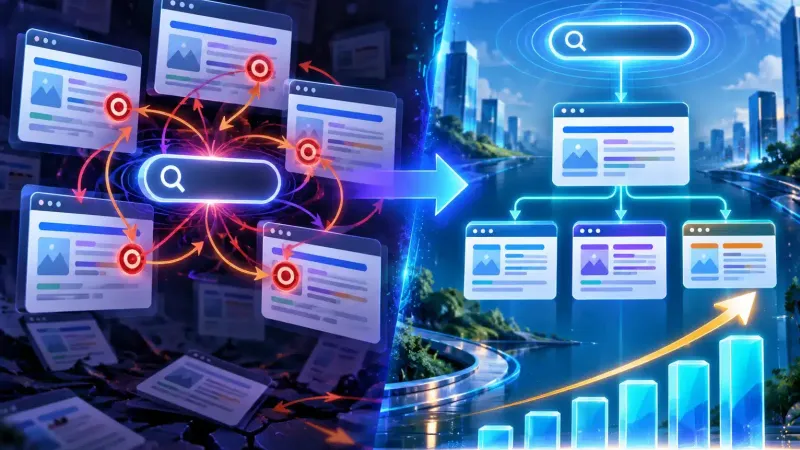
The mechanism is simple. Every time another website links from its content to your page, Google reads that link as a signal of trust. The more reputable websites recommend you, the more authority your site has in the eyes of Google's algorithm. This concept is called PageRank, and it has been the basis of how Google ranks pages since the company began.
One thing to understand early: backlinks do not all work the same way. A backlink from a high-authority website that is relevant to your topic passes far more 'link juice', or SEO value. A backlink from a spam site, on the other hand, can damage your domain's reputation. With backlinks, quality always beats quantity.
According to Ahrefs research (2023), 66.3% of all pages on the internet have no backlinks at all. Pages without backlinks almost never appear in Google's organic search results, which makes link building one of the most critical SEO factors for winning traffic from search engines.Why are backlinks so important for SEO?
Backlinks remain one of Google's strongest ranking factors.
Google uses backlinks for three main purposes. First, as a trust signal: if a trusted website links to you, Google treats your content as credible. Second, as a discovery tool: Google follows links to find new pages. Third, as a signal of topical authority: backlinks from relevant websites help Google understand that you are an expert in a particular field.
Types of backlinks: dofollow vs nofollow vs sponsored vs UGC
There are four main types of backlink you need to understand. Each has a different HTML attribute and a different effect on SEO. Dofollow backlinks are the most sought after because they pass SEO value directly.
| Backlink type | HTML attribute | SEO effect | Example use |
|---|---|---|---|
| Dofollow | No special rel attribute | Positive: passes link juice | Guest posts, editorial links |
| Nofollow | rel="nofollow" | Does not pass juice directly | Blog comments, forums |
| Sponsored | rel="sponsored" | Marks paid links | Advertorials, ads |
| UGC | rel="ugc" | Marks user-generated content | Product reviews, Q&A forums |
Dofollow backlinks are the most valuable for SEO. No attribute stops Google from following the link, so the linking site's authority can 'flow' to your page. This is what people call link juice, and it is the main target of any link building campaign.
Nofollow backlinks tell Google not to pass on SEO value. That does not make them useless. A nofollow backlink from a major media outlet still brings referral traffic and raises brand awareness. Since its 2019 update, Google has also said it treats nofollow as a 'hint' rather than an absolute instruction.
Sponsored and UGC are attributes Google introduced in 2019. Both help Google understand the context of a link. If you pay for an article and do not mark the link as sponsored, it can be seen as manipulation and puts you at risk of a Google Penguin penalty.
Quality backlinks vs toxic backlinks: what is the difference?
Not every backlink helps. Harmful links, known as toxic backlinks, can do significant damage to your website's rankings.
Signs of a quality backlink
High-quality backlinks come from websites that are relevant to your topic, have a Domain Authority (DA) above 30, receive real organic traffic, and place the link within editorial content (not in the sidebar or footer). The anchor text reads naturally and is not stuffed with keywords.
Signs of a toxic backlink
Harmful backlinks usually come from irrelevant or spam-filled websites, or are created in bulk with automated software. Warning signs include a very low DA (below 10), thin or unclear content, anchor text unnaturally packed with exact-match keywords, or links from a PBN (Private Blog Network) that Google has already deindexed. If your website suddenly picks up hundreds of backlinks in a short time, treat it with caution.

How to measure backlink quality (Domain Authority, Trust Flow, relevance)
Measuring backlink quality takes more than counting links. Domain Authority (DA) from Moz, Domain Rating (DR) from Ahrefs and Trust Flow from Majestic are the three main metrics SEO practitioners use.
Domain Authority (DA) and Domain Rating (DR)
DA and DR both use a 0-100 scale. The higher the score, the more authoritative the website. Backlinks from websites with a DA/DR above 50 are considered very valuable. Bear in mind, though, that DA and DR are third-party metrics, not official Google metrics. Use them as an estimate rather than an absolute benchmark.
Trust Flow and Citation Flow
Trust Flow (TF) from Majestic measures how many trusted websites link to a domain. Citation Flow (CF) measures the number of links without taking quality into account. A healthy TF/CF ratio is above 0.5. If CF is much higher than TF, it can point to an unnatural backlink profile.
Topical relevance
Relevance is an often underrated factor. Backlinks from websites that cover the same topic as your niche, or one very close to it, send a strong signal of topical authority. Google keeps getting better at understanding the context of content, so a backlink from a semantically relevant website carries more weight than one from an authoritative but unrelated site.
Domain Authority is a score Moz calculates mainly from a website's link profile, and it is not an official Google metric. Topical relevance and the quality of the content on the page receiving the backlink matter just as much as the DA score itself.How to earn quality backlinks organically
Earning backlinks organically is the best and safest long-term strategy.
1. Create content worth citing
Content with original data, unique research, infographics or comprehensive guides tends to attract backlinks naturally. People want to cite sources that give them genuinely useful information. An article such as 'Study: 100 Indonesian Small Businesses (UMKM) and Their Digital Strategies' is far more likely to be cited than a generic tips article.
2. Guest posting on relevant websites
Guest posting is one of the most effective and controllable ways to earn quality backlinks. You write an article for another website in your niche, and in return you get one or two backlinks to your own site. The key is to choose websites that are genuinely relevant, have active readers, and are not 'article farms' built purely to sell links.
3. Digital PR and media coverage
Sending press releases to online media, offering expert commentary to journalists, or signing up to platforms that connect journalists with expert sources are all ways to earn backlinks from major media. A backlink from a high-authority outlet such as the Indonesian news sites Kompas.com or Detik.com can give your website's Domain Rating a significant boost.
4. Broken link building
This strategy involves finding broken links (404s) on other websites, then offering your content as a replacement. Both sides benefit: the site owner fixes a broken link, and you gain a new backlink. Use tools such as Ahrefs or Check My Links (a Chrome extension) to find these opportunities.
How to check your website's backlinks with free tools
You do not need to sign up for a paid SEO tool straight away to monitor your backlink profile. Several free tools are capable enough for an initial analysis. Google itself provides backlink data through Google Search Console, and that data comes straight from Google's own crawler.
Google Search Console
Open Google Search Console and go to the Links menu in the left sidebar. Here you can see your top linking sites (the websites that link to you most), top linked pages (the pages with the most backlinks) and the anchor text used most often. The data comes directly from Google, so it is the most accurate source for basic monitoring.
Ahrefs Webmaster Tools (free)
Ahrefs offers a free version, Ahrefs Webmaster Tools, which connects to Search Console. You get more detailed backlink data, including the linking site's DR, the link type (dofollow/nofollow) and the link status (live or lost). It is the best option for a deeper backlink analysis at no cost.
Ubersuggest (limited free version)
Neil Patel's Ubersuggest gives limited free access to backlink data. You can see the number of backlinks, the DA of linking domains and which pages attract the most links. The data is not as complete as Ahrefs, but Ubersuggest is handy for a quick competitor check or an initial audit of a new website.
Key takeaways
- Backlinks are the strongest trust signal for Google. Every link from another website acts as a 'vote' that supports your page's authority.
- Quality matters more than quantity. One backlink from a high-authority national outlet can have more impact than 100 backlinks from spam sites.
- There are four main types of backlink: dofollow (passes link juice), nofollow (indirect value), sponsored (paid links) and UGC (user-generated content).
- Toxic backlinks need monitoring and, where necessary, disavowing through Google Search Console before they damage your rankings.
- Start with free tools such as Google Search Console and Ahrefs Webmaster Tools to monitor and analyse your backlink profile.
Build a quality backlink profile for your website
Webzoo's SEO team builds high-quality backlinks that are safe and relevant to your field, and measures their effect on your website's Google rankings.
Book a free consultation on WhatsAppReferences
- Ahrefs. (2023). Why 66.3% of pages get no organic search traffic from Google. https://ahrefs.com/blog/search-traffic-study/
- Backlinko. (2023). Google's 200 Ranking Factors: The Complete List. https://backlinko.com/google-ranking-factors
- Moz. (2022). Domain Authority: What It Is and Why It Matters. https://moz.com/learn/seo/domain-authority
- Google Search Central. (2023). Qualify your outbound links to Google. https://developers.google.com/search/docs/crawling-indexing/qualify-outbound-links