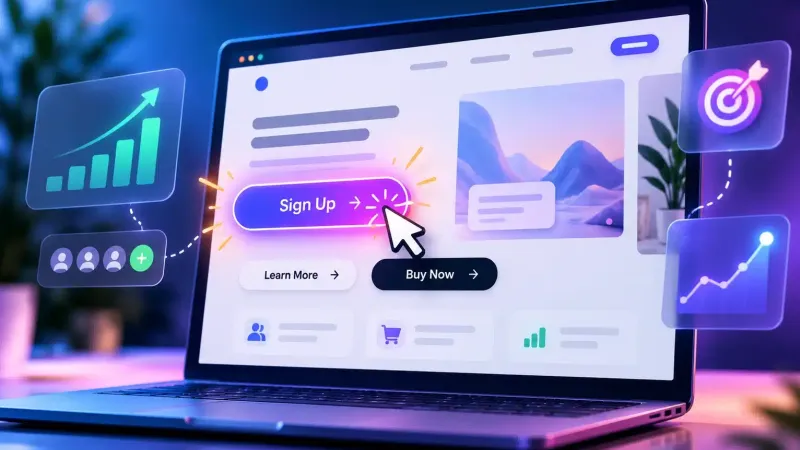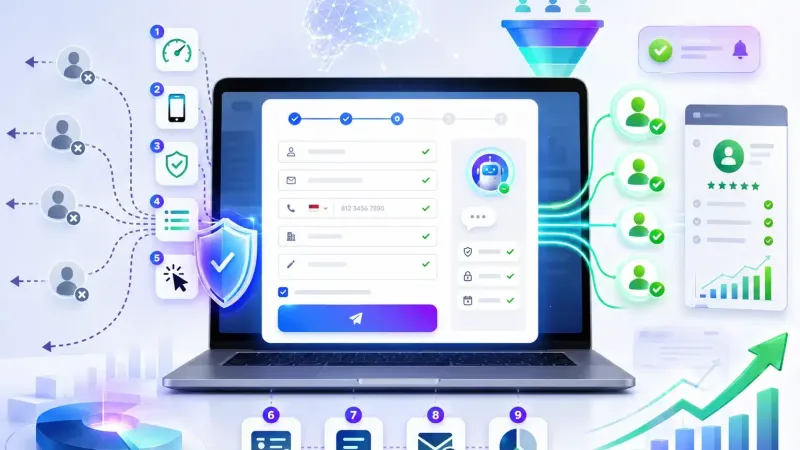
What is a landing page, and why does every business need one? Business owners who are just starting their digital journey ask this a lot. A landing page is a web page designed with a single purpose: converting visitors into customers, subscribers or leads. Unlike a homepage, with its many navigation links and multiple goals, a landing page is the sharpest tool in your digital marketing kit.
Key points in this article
- An optimised landing page usually converts far better than an ordinary website page for ad campaigns
- One landing page = one goal = one CTA: focus is the key to high conversion
- Above the fold (the part visible without scrolling) must already answer what you are offering, who it is for and why they should trust you
- A landing page without a form or a clear CTA button is wasted ad spend
- At minimum, A/B test the headline and CTA: small changes to these two elements can shift conversions considerably
- How Much Does a Professional Website Cost in Indonesia in 2026?
- On-Page SEO Techniques That Still Work in 2026
- WordPress vs a Custom Website: Which Suits Your Business Better?
What is a landing page? Definition and main purpose
A landing page is a standalone web page built for a specific marketing campaign or ad. When someone clicks a Google Ads or Facebook Ads ad, or a link in a promotional email, they 'land' on this page. That is where the name comes from.
The fundamental difference from an ordinary web page is that a landing page has a single focus: one message, one offer, one CTA button. There are no navigation menus to pull attention away, and no links to unrelated pages. Every element on the page is designed to get visitors to take one specific action.
Because every element points to one action, a landing page usually converts ad traffic better than a homepage does. For any business that advertises, a landing page has become a basic requirement.
Landing page vs homepage vs full website
Many business owners make the mistake of using their homepage as the landing page for their ads. It wastes ad budget. Here is how the three differ:
| Aspect | Homepage | Landing page | Full website |
|---|---|---|---|
| Goal | Brand awareness, navigation | A single conversion | Complete information |
| Navigation menu | Yes, full | None or minimal | Yes, full |
| Number of CTAs | Many | One | Many |
| Suitable for ads | Less than optimal | Highly suitable | Not ideal |
| Conversion rate | 1-3% | 5-15%+ | 1-2% |
5 types of landing page you should know
1. Lead generation landing page
Designed to collect contact details (name, email or phone number) in exchange for something of value: a free ebook, a consultation, a product demo or an exclusive discount. This is the most common type of landing page for B2B businesses and professional services.
2. Click-through landing page
Acts as a 'bridge' between the ad and the product or checkout page. It warms up potential buyers by explaining the product's benefits before they see the price and the buy button. Very effective for high-priced products that need more explanation.
3. Sales landing page (long-form)
A long sales page that answers every objection a potential buyer might have. It includes testimonials, social proof, detailed benefits, FAQs and multiple CTAs. Suited to digital products, online courses and premium services.
4. Coming soon / pre-launch page
A simple page for collecting potential customers' email addresses before a product or service officially launches. It builds anticipation and a waiting list you can contact as soon as you launch.
5. Thank you page
The confirmation page a visitor sees after taking an action (filling in a form, making a purchase). It is often overlooked, yet it is a golden opportunity to offer additional products (upsell/cross-sell) or ask for referrals.
The elements of a high-converting landing page
A successful landing page depends far more on having the right elements in the right places than on a beautiful design. The essential components:
- A strong headline: state your main value in 7 words or fewer. 'Win 1,000 New Customers in 30 Days' is stronger than 'Professional Digital Marketing Services'
- Subheadline: clarify the headline with 1-2 sentences explaining how you deliver on that promise
- Hero image or video: high-quality visuals showing the product or service, or the result customers will achieve
- Benefit bullet points: 3-5 key benefits, focused on what the customer actually gains rather than on features
- Social proof: testimonials with real names and photos, the number of customers you have served, or client company logos
- A prominent CTA: a button in a contrasting colour with specific text. 'Get a Free Consultation' works better than 'Submit'
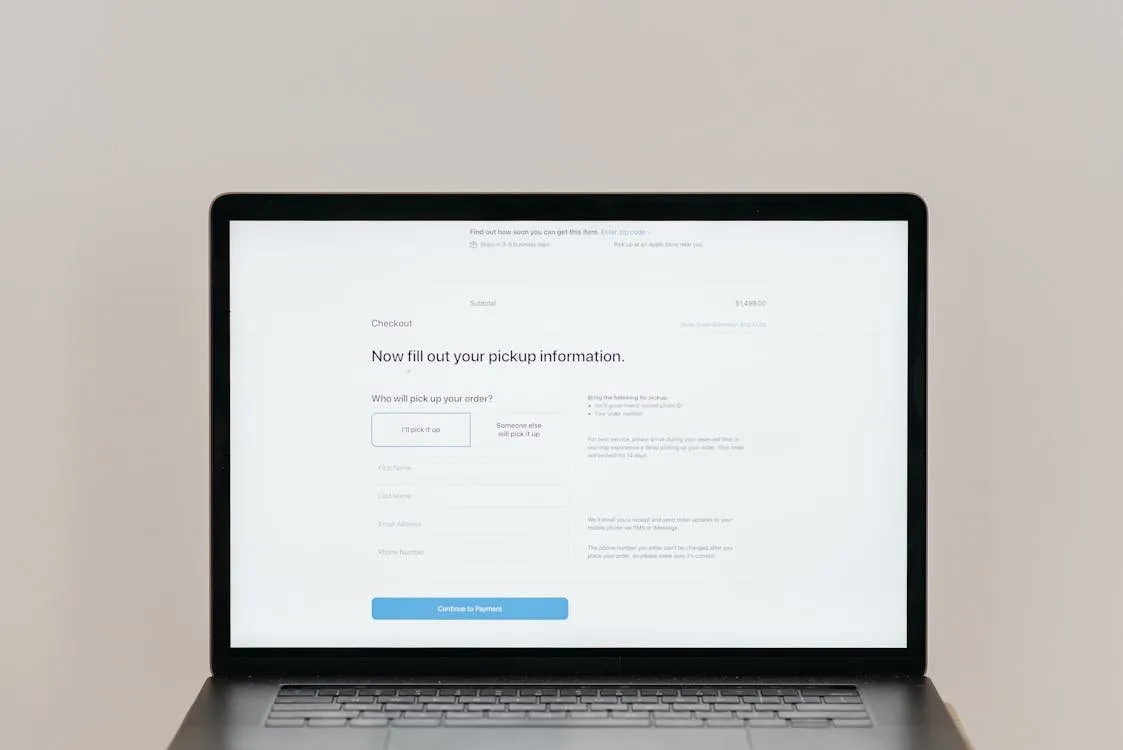
- A simple form: ask for as little information as possible. Name and email are enough at the first stage
- Trust signals: certificates, awards, media coverage or a money-back guarantee
How to build a landing page in WordPress
WordPress is the best platform for building landing pages that are SEO-friendly and easy to customise. Here are the two most popular approaches:
Option 1: Elementor (recommended)
Elementor is a drag-and-drop page builder with ready-made landing page templates. The steps: install Elementor, create a new page, click 'Edit with Elementor', choose a landing page template, customise the content, then publish. Average time: 2-4 hours for a professional landing page.
Option 2: a dedicated landing page plugin
Plugins such as SeedProd or Beaver Builder offer landing page templates built specifically for conversion, with built-in A/B testing, countdown timers and email marketing integration.
Tips for optimising your landing page for maximum conversions
- A/B testing: test variations of the headline, CTA colour and form length to find the best combination
- Page speed: slow landing pages lose many visitors before they have read anything. Optimise your images and use good-quality hosting such as Hostinger
- Mobile optimisation: most traffic in Indonesia comes from mobile, so make sure your landing page looks right on a smartphone
- Consistent messaging: make sure the ad copy matches the landing page headline (message match) to avoid a high bounce rate
- FOMO elements: countdown timers, limited stock or time-limited offers increase urgency and conversions
- Live chat or WhatsApp: a floating WhatsApp button makes it easy for Indonesian prospects to ask a question before they decide

When does your business need a professional landing page?
You need a professional landing page if you run Google Ads or Meta Ads, are launching a new product or service, are hosting a webinar or event, are offering a free consultation, or want to increase conversions from the traffic you already have.
For the best results, using a professional landing page development service with experience in high-converting landing page design is a worthwhile investment.
References
High-converting landing pages for your business
Webzoo designs landing pages with one clear goal, a message that matches your ads and a short form.
Book a free landing page consultation