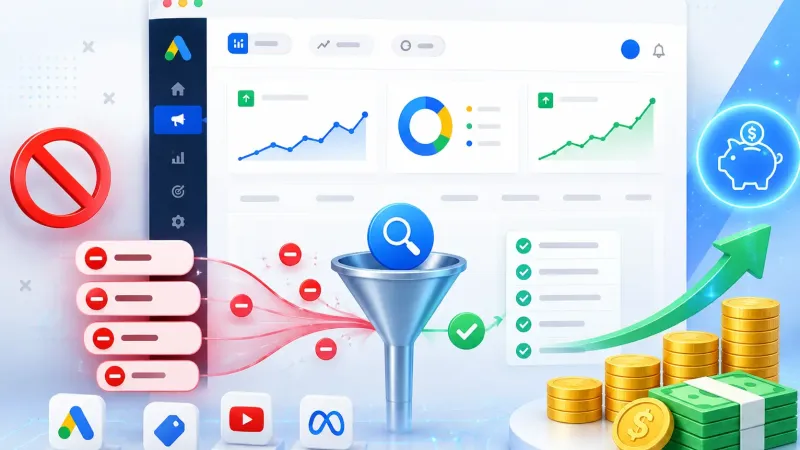
Google Ads management for small businesses is a fast way to win traffic, leads and sales without waiting a long time for organic results. For small business (UMKM) owners and entrepreneurs, the challenge goes beyond switching the ads on. The real challenge is keeping the budget efficient, showing ads to the right people and making sure clicks actually turn into prospects. That is where strategy, campaign structure and ongoing optimisation matter most. webzoo.id helps businesses run Google Ads in a more focused, measurable way, aimed at business results rather than impression counts.
Why Google Ads management for small businesses matters more than ever
Consumer behaviour today is highly intent-driven. People search when they need a solution. So when a potential customer types a keyword such as “office interior design services”, “dentist near me” or “food packaging supplier”, they are already close to making a decision.
Google itself says Search handles more than 5 trillion searches a year (Google, 2025). That shows how big the opportunity is to capture demand that already exists. Google Ads is really about being visible at the exact moment a potential buyer is searching.
Google's Economic Impact Report has also long pointed out that businesses earn, on average, around USD 2 in revenue for every USD 1 they spend on Google Ads. The figure will of course vary by industry. But the message is clear: managed properly, Google Ads can be a highly measurable channel.
For small businesses, the main advantage is speed. You do not have to wait months to become visible. You can appear in search results straight away, test your offer and see the performance data. If you are still building the foundations of your campaigns, our guide to Google Ads for businesses in Indonesia is a useful companion read.
The challenges of running Google Ads yourself
Many businesses feel Google Ads is expensive. In many cases, though, the expense comes from a poor setup rather than from the platform itself.
Choosing the wrong keywords
The most common mistake is choosing keywords that are too broad. For example, a renovation business targets “house” or “design”. Keywords like these can bring plenty of clicks, but the buying intent behind them is weak.
High-intent keywords such as “house renovation services Tangerang” or “office interior contractor Jakarta”, on the other hand, tend to be much closer to conversion. That is why keyword research has to look at search intent as well as volume.
The budget runs out too fast
Budgets often leak for a few reasons: location targeting is too wide, ad scheduling is not limited, devices are not analysed and negative keywords are not set up. As a result, clicks come from less relevant audiences.
If you want to dig deeper into efficiency, read our article with tips to stop your ads wasting budget. This topic matters a great deal for small businesses that need to protect cash flow while still actively chasing new customers.
A landing page that is not ready to convert
Another problem that is often missed is the destination page. Your ads can be good, but if the landing page is slow, the message is unclear or the CTA is weak, the results will still be poor.
LocaliQ's 2024 benchmarks put the average Google Search Ads CTR across industries at 6.42%. These figures are useful as a starting point, but real results still depend heavily on the quality of the landing page, the tracking and how relevant the offer is. That is why businesses also need to pay attention to high-converting landing pages, so clicks are not wasted.
What a Google Ads management service does for small businesses
A good service does more than “run ads”. It builds a customer acquisition system you can measure.
Keyword and intent research
The first step is to choose keywords based on user intent. Keywords are usually grouped into three types: informational, commercial and transactional. If your goal is to sell services, most of the weight should sit on commercial and transactional keywords.
At this stage, the team also builds a negative keyword list so irrelevant searches do not eat into the budget. That makes the campaign more precise from the start.
Campaign structure and ad copy
A tidy campaign structure affects the quality of your data and how easy the account is to optimise. Each ad group needs a clear keyword theme, relevant copy and supporting extensions such as sitelinks, callouts and call extensions.
The ad message also needs to highlight concrete value, for example a free consultation, regular reports, weekly optimisation or a focus on leads. In highly competitive markets, the quality of this message is often what sets you apart.
Tracking, optimisation and evaluation
Without tracking, a business only sees clicks. What it actually needs is conversion data: phone calls, form submissions, WhatsApp chats, checkouts or qualified leads.
That is why Google Ads management for small businesses should ideally include setting up conversion tracking, reviewing keywords, improving bidding, testing ad copy and analysing landing pages. This way, optimisation decisions are based on data rather than assumptions.
How to stop your ads wasting money and keep the leads coming
To get consistent campaign results, you need to optimise at a few key points.
Negative keywords and audience filtering
Negative keywords filter out searches that have no business value. For example, a service business does not need to appear for searches containing “free”, “example” or “template” if it does not sell those things.
Location filtering also matters, especially for local businesses. Think with Google has shown that 76% of people who run a local search on their smartphone visit a related business within a day, and 28% of them end up making a purchase (Think with Google). In other words, location targeting is far from a small detail. It can decide your results.
Quality Score and landing page relevance
Quality Score affects cost efficiency and ad position. The more relevant your keywords, ads and landing page are to each other, the better your chances of getting quality clicks at a healthier cost.
To understand these factors in more detail, read our article on Google Ads Quality Score. In practice, a better Quality Score rarely comes from technical tricks. It usually comes from aligning the message across keyword, ad and landing page.
Remarketing to win back warm prospects
Not everyone converts on their first visit. That is why remarketing matters: it brings back visitors who have already shown interest.
This strategy suits businesses with a longer consideration cycle, such as B2B services, education, property and professional services. If you want to expand your digital follow-up strategy, see our article on Google Ads remarketing.
When should a business hire a Google Ads agency?
Not every business needs to start big. But a few situations suggest you are ready for professional help.
First, when you need leads faster than your current SEO can deliver them. Second, when your ad budget is being spent but the results are inconsistent. Third, when you struggle to read the data and do not know which part to fix. Fourth, when your in-house team does not have enough time to monitor campaigns every week.
In situations like these, using Google Ads management for small businesses is usually more efficient than a long stretch of trial and error. Alongside the technical work, you are paying for faster learning, more accurate optimisation and disciplined reviews.
Why choose webzoo.id
webzoo.id is a good fit for businesses that want their Google Ads campaigns aligned with their other digital assets, especially their website and landing pages. That matters because ad performance does not exist in isolation.
An effective approach usually covers a few things. First, understanding the target market and search intent. Second, setting up a clean campaign structure that is easy to measure. Third, connecting the ads to landing pages built for conversion. Fourth, reviewing performance regularly based on data.
With that approach, a business goes after more relevant leads, a healthier acquisition cost and steadier growth, rather than clicks alone. Where needed, webzoo.id can also combine campaigns with improvements to your landing pages, so the path from click to conversion becomes shorter and clearer.
Conclusion
In the end, Google Ads management for small businesses is about much more than switching campaigns on. What matters is making sure every rupiah is working in the right direction. With the right keyword research, a tidy campaign structure, a landing page that is ready to convert and regular optimisation, Google Ads can become a powerful customer acquisition engine for your business.
If you want more targeted leads, less wasted budget and results you can measure, webzoo.id is worth considering as a strategic partner. With the right strategy, Google Ads management for small businesses can be one of the marketing investments whose impact you feel fastest.
References
- “Google Search handles more than 5 trillion searches per year”, Google, 2025.
- “Economic Impact Report”, Google.
- “How mobile search connects consumers to stores”, Think with Google.
- “Google Ads Benchmarks for 2024”, LocaliQ, 2024.
- “A Guide to Google Ads for Businesses in Indonesia”, webzoo.id: https://webzoo.id/panduan-google-ads-bisnis-indonesia/
- “High-Converting Landing Pages”, webzoo.id: https://webzoo.id/landing-page-konversi-tinggi/