Google local pack ads have just seen the most dramatic surge in the history of Google's local search. In just three months, the share of mobile keywords showing ads in the Google Maps box rose by more than 700%, turning a part of the results page that used to be organic into a paid arena. For small business (UMKM) owners and local businesses in Indonesia, understanding how this shift works is now urgent, because positions you could once earn for free by optimising your business profile now have to compete with ad slots.
This article explains what local pack ads are, what the latest data says about their rise, and seven practical strategies to keep your business visible in the Google Maps box as competition intensifies, including when is the best time to start investing there.
What are local pack ads and why have they suddenly taken off?
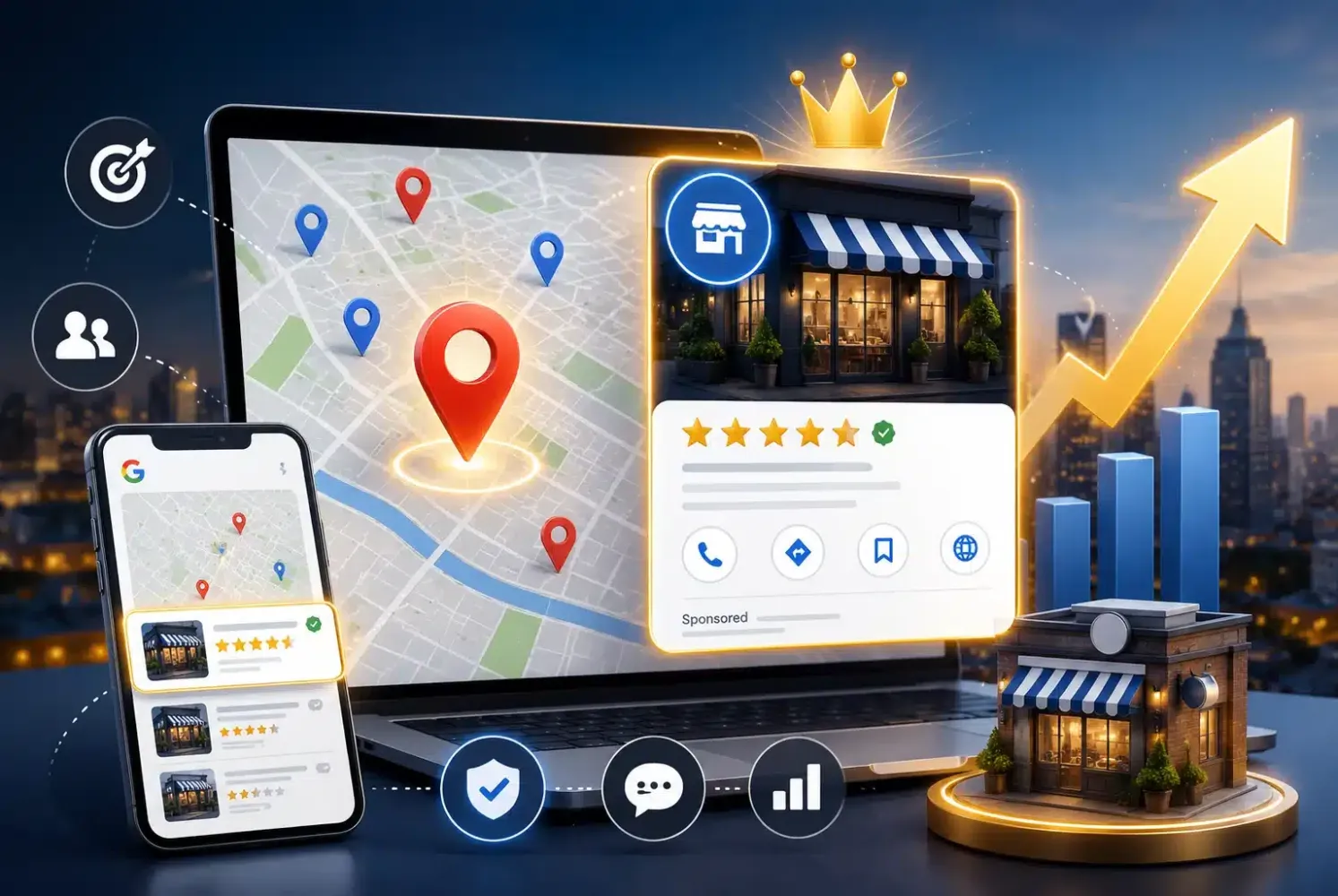
Local pack ads are paid ads that appear inside the “map box”, or local pack: the top three results with the Google Maps logo that show up when someone searches for a business near them, such as “motorbike repair shop near me” or “coffee shop Bekasi”. These slots used to be filled almost entirely with organic results based on Google Business Profile signals, reviews and location relevance. Now Google has started inserting a “Sponsored” label into the same slots, so businesses that advertise can “jump the queue” for positions that used to be won through local SEO alone.
The change did not come out of nowhere. At the same time, Google is moving Local Services Ads into the main Google Ads platform, rolling out gradually from August 2026 for certain categories (PPC Land, 2026). This structural shift suggests Google is consolidating all of its local ad formats, and local pack ads are the most visible sign of that strategy in everyday search results.
How local pack ads differ from regular local SEO
Many business owners assume the local pack is entirely about optimising a Google Business Profile. Local SEO remains essential as a foundation, but this paid feature adds a new layer: the ability to pay to make sure you appear at the top, however developed your business profile is. Ideally the two strategies run side by side rather than one replacing the other, as explained in more detail in our guide to local SEO in Indonesia for local businesses on Google Maps.
The latest data: the surge in local pack ads you need to know about
The numbers are striking. In roughly three months up to January 2026, the share of mobile keywords showing local pack ads jumped from under 3% to around 22%, a rise of 733% (PPC Land, based on research by local search consultant Joy Hawkins, 2026). By November 2025 the figure was already 6.48%, rising to 14.02% in December and reaching 21.99% in January 2026. A rise this steady points to a deliberate platform strategy rather than a small test.
This matters all the more in Indonesia, where Google holds 97.09% of the search engine market (StatCounter via DataReportal, 2026), making it the most strategic channel for local businesses. Meanwhile, more and more small businesses in Indonesia are starting to use local SEO strategies, but moving part of the local pack into paid territory means businesses that rely only on organic optimisation risk losing visibility without realising it.
The cost per click for Google Search Ads in Indonesia is usually lower than in global markets, and small businesses just starting to build awareness can begin with a budget of around Rp 1.5 million to Rp 3 million a month. For local pack ads specifically, a budget of that size is enough to start testing how well they work in a service area that is not too large.
7 strategies to win with local pack ads
Here are seven practical steps to keep your business competitive as local pack ads change the picture.
1. Tidy up your Google Business Profile as the foundation
Before you put budget into local ads, make sure your Google Business Profile is complete: the right business category, accurate opening hours and recent photos. A strong organic foundation makes local ads perform much more efficiently, because your relevance score is already good from the start.
2. Turn on location extensions in your Google Ads campaigns
Link your Google Ads account to your Google Business Profile so that location extensions appear automatically. This is one of the most basic technical requirements for your ads to have a chance of appearing in the local pack. You will find fuller set-up steps in our Google Ads guide for Indonesian businesses.
3. Focus your target radius on the area you actually serve
Local pack ads work best when the targeting radius realistically matches the area your business serves, rather than the whole city. Narrowing the radius usually lowers your cost per click and makes the ads more relevant to potential customers who really are nearby.
4. Collect and manage reviews actively
Even with paid placement, review signals still affect how Google judges a business's quality in the local pack. Businesses with high ratings and active reviews tend to see better local ad performance than competitors with passive profiles.
5. Test a small budget before scaling up
Because this format is still fairly new, start with a test budget of around Rp 1.5-2 million a month for one full month, then evaluate the ratio of clicks to calls or visits before you increase your local ad budget significantly.
6. Keep an eye on changes to the “Sponsored” label
Google is still adjusting this format, so the label and the position of local pack ads can change without official notice. Check your local performance dashboard regularly, at least every two weeks, so you can adapt your strategy quickly.
7. Combine your ads data with Search Console
Local pack data is not always fully reflected in a single dashboard. Combining local ad performance monitoring with organic search data from Search Console helps you see the whole picture, as explained in our Google Search Console guide for beginners.
Common mistakes when chasing local pack ads
The most common mistake is jumping straight to a big budget without tidying up your Google Business Profile first, so the local ads appear but convert poorly because the profile does not reassure potential customers. Another is leaving the targeting radius too wide, which burns budget on clicks from places outside the area you actually serve.
When is the best time to focus on local pack ads?
The right time to get serious about this format is once your business has a clearly defined service area and a Google Business Profile that has been active for at least a few months with genuine reviews. Very new businesses should tidy up their profile and gather their first reviews before allocating a local ad budget step by step.
Conclusion: do not fall behind on local pack ads
The surge in local pack ads marks a new chapter in local search competition that small business owners cannot afford to ignore. With a tidy business profile, a realistic target radius and a measured test budget, the seven strategies above can help your business stay visible in the Google Maps box even as organic slots become scarcer. If you would like hands-on help setting up and optimising local campaigns, Webzoo's Google Ads team can support you, from auditing your profile to managing your ads on an ongoing basis.
References
- PPC Land. “Google increases local pack ads by 733% in three months” (2026). ppc.land
- PPC Land. “Google folds Local Services Ads into Google Ads, cuts historical reports” (2026). ppc.land
- DataReportal. “Digital 2026: Indonesia” (2026). datareportal.com